May – August 2026
Think · Act · Teach
Rehumanising
Democracy
Advancing civic dialogue, civic resilience, and AI for the common good — restoring trust, moral clarity, and human dignity to democratic life.
May – August 2026
A short guide to the conviction, the method, and the evidence behind rehumanising democratic life.
Born from crisis, grounded in wisdom.
The Global Centre for Rehumanising Democracy emerged from a simple recognition: you cannot rebuild trust through better communications or institutional reforms alone. Trust emerges when leaders embody integrity, demonstrate genuine care, and create authentic connections with those they serve.
We were founded as a not-for-profit organisation in the United Kingdom to pioneer a new approach — one that addresses not just the mechanics of governance, but its deeper human and ethical foundations, through the integration of contemplative wisdom with rigorous policy expertise.
We are a think–act–teach tank: combining deep analysis, principled civic action, and leadership formation to restore moral clarity, trust, and human dignity to democratic life.
Rebuilding trust through inner transformation.
The horrors of two World Wars once inspired bold new institutions, norms, and instruments — the League of Nations after the First; the United Nations, the Universal Declaration of Human Rights, and the Geneva Conventions after the Second. Today's crises — from Ukraine to Gaza, from Sudan to rising authoritarianism — demand an equally bold response.
Just as the fractures of the early twentieth century gave birth to a new international order, today's fractures call for new instruments, epistemologies, and moral values that meet the challenges of our time and the deepest aspirations of all humanity.
Our work advances three commitments: civic dialogue, civic resilience, and AI for the common good.
Our Premise
The crisis of democracy cannot be solved by technical fixes alone. Trust emerges when leaders embody moral integrity and genuine care.
Our Mission
Combine real-time trust intelligence with contemplative leadership formation — finding where trust broke down, then forming leaders who can rebuild it.
Our Method
Use technology to identify where trust has broken down through real-time discourse analysis, then form leaders who embody authentic presence.
Citizens don't distrust institutions — they distrust people.
Conventional approaches fail because they treat the symptoms of democratic dysfunction rather than its core cause.
The Problem
When citizens say they don't trust government, they are really saying they don't trust the people in government. When they lose faith in elections, they first lose faith in the candidates. When they abandon democracy, they have given up on the leaders who claim to represent them.
Our Solution
We address the dimensions of trustworthiness that cannot be faked — developing leaders who embody the qualities that create trust, and building systems that are themselves trustworthy. Technology identifies where trust has broken down; contemplative formation rebuilds it.
We develop leaders through contemplative formation who embody the authentic presence and moral fibre needed to rebuild trust.
Measuring democracy's pulse in real time.
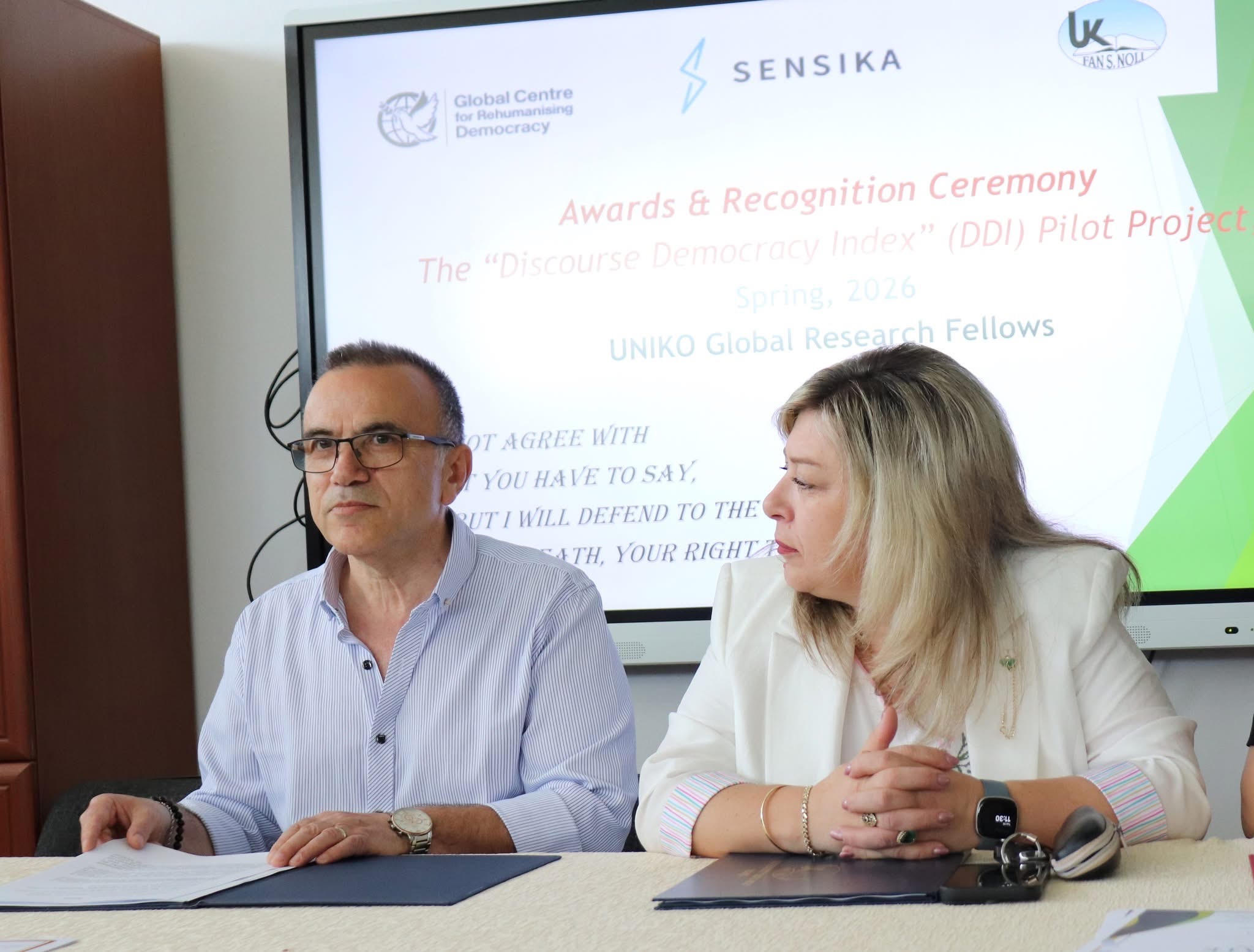
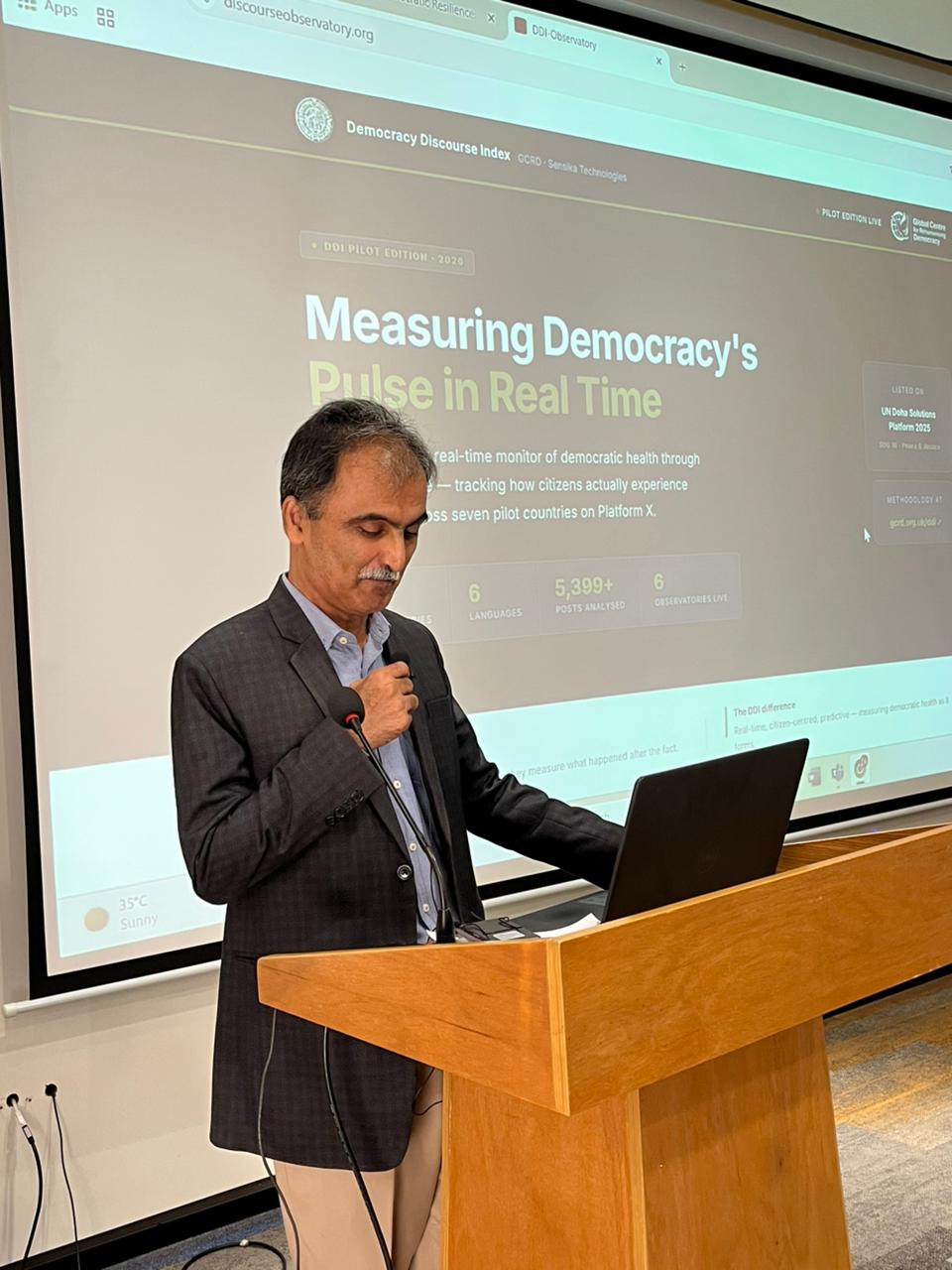
The Democracy Discourse Index is the world's first real-time monitor of democratic health through public discourse — tracking how citizens actually experience democracy across seven countries on Platform X. It is led by GCRD with Sensika Technologies as part of our joint Disinformation Observatory.
Where traditional indices are reactive, annual, and elite-focused — measuring what happened after the fact — the DDI is real-time, citizen-centred, and predictive, measuring democratic health as it forms.
- 7
- Countries
- 6
- Languages
- 4
- Dimensions
- SDG 16
- Peace & justice
The composite scale — from 0 to 100
< 25%
Severely degraded discourse.
25–49%
Significant deficits.
50–74%
Positive but uneven.
≥ 75%
Empathetic & civil.
Catalogued in the United Nations DESA Doha Solutions Platform for Social Development — a digital repository showcasing transformative initiatives tackling global social challenges, in alignment with Sustainable Development Goal 16.
Four lenses on every post.
Every post is evaluated through four dimensions — measuring the quality of discourse, not its political content. Together they ask a single question: does this conversation treat people as fully human?
Empathy Index
Empathy ↔ Indifference
Does this post treat other people as full human beings? Tracks care, solidarity, and recognition of shared humanity across political divides.
- Perspective-Taking
- Emotional Recognition
- Humanisation
- Solidarity
- Anti-Hostility
Civility Index
Civility ↔ Toxicity
Measures respect, restraint, and reasoned argument versus insult, aggression, or dehumanisation. Toxic discourse precedes institutional breakdown.
- Respectful Tone
- Non-Dehumanisation
- Constructive Disagreement
- De-escalation
- Generous Interpretation
Trust Language Index
Trust ↔ Cynicism
Captures public confidence in democratic institutions and interpersonal trust within civic discourse. Trust collapse makes collective democratic action impossible.
- Institutional Trust
- Interpersonal Trust
- Evidence-Based Claims
- Transparency
- Good-Faith Engagement
Democratic Agency
Efficacy ↔ Disempowerment
Tracks whether citizens feel capable of influencing political outcomes — the civic self-belief that sustains democratic participation.
- Civic Efficacy
- Participation Encouragement
- Solution Orientation
- Empowerment Language
- Collective Action
Human-validated AI for democratic discourse.
Grounded in Critical Discourse Analysis and deliberative democracy scholarship, the DDI pairs a global university network for human-coded training data with AI that scales analysis. The result is computationally robust and methodologically transparent — a credible foundation for evidence-based policy.
- 01
Human-coded ground truth
Student annotators, under faculty supervision, apply a validated, theoretically grounded codebook spanning 20 indicators across four dimensions.
- 02
Three independent coders
Each post is coded by three annotators independently, with intercoder reliability measured using Krippendorff's alpha.
- 03
Structured adjudication
Disagreements are resolved through a structured protocol, producing a consensus-validated dataset above a 75% reliability threshold.
- 04
AI at scale
The validated dataset fine-tunes large language models, scaling rigorous analysis across millions of posts without losing methodological transparency.
- 20
- Indicators
- 3
- Annotators / post
- 75%
- ICA threshold
- 7
- Universities
Six observatories, one moral picture.
Composite scores from the May–August 2026 study, sorted high to low. Each figure reflects the latest adjudicated batch for that country. Most sit firmly in the Concerning band — civil in tone, but thin in empathy and agency.
Detailed scorecards
Wk 1–8
60.3%
- D1 Empathy
- 59.2
- D2 Civility
- 64.6
- D3 Trust
- 63.8
- D4 Agency
- 53.8
Wk 1–5
44.8%
- D1 Empathy
- 42.5
- D2 Civility
- 45.1
- D3 Trust
- 46.5
- D4 Agency
- 44.8
Wk 1–9
41.8%
- D1 Empathy
- 43.0
- D2 Civility
- 50.1
- D3 Trust
- 40.0
- D4 Agency
- 34.0
Wk 1–5
41.7%
- D1 Empathy
- 40.9
- D2 Civility
- 46.8
- D3 Trust
- 44.3
- D4 Agency
- 33.3
Wk 1
38.8%
- D1 Empathy
- 43.0
- D2 Civility
- 40.7
- D3 Trust
- 37.2
- D4 Agency
- 34.4
Wk 1–5
33.8%
- D1 Empathy
- 32.4
- D2 Civility
- 40.6
- D3 Trust
- 37.6
- D4 Agency
- 24.5
From the field
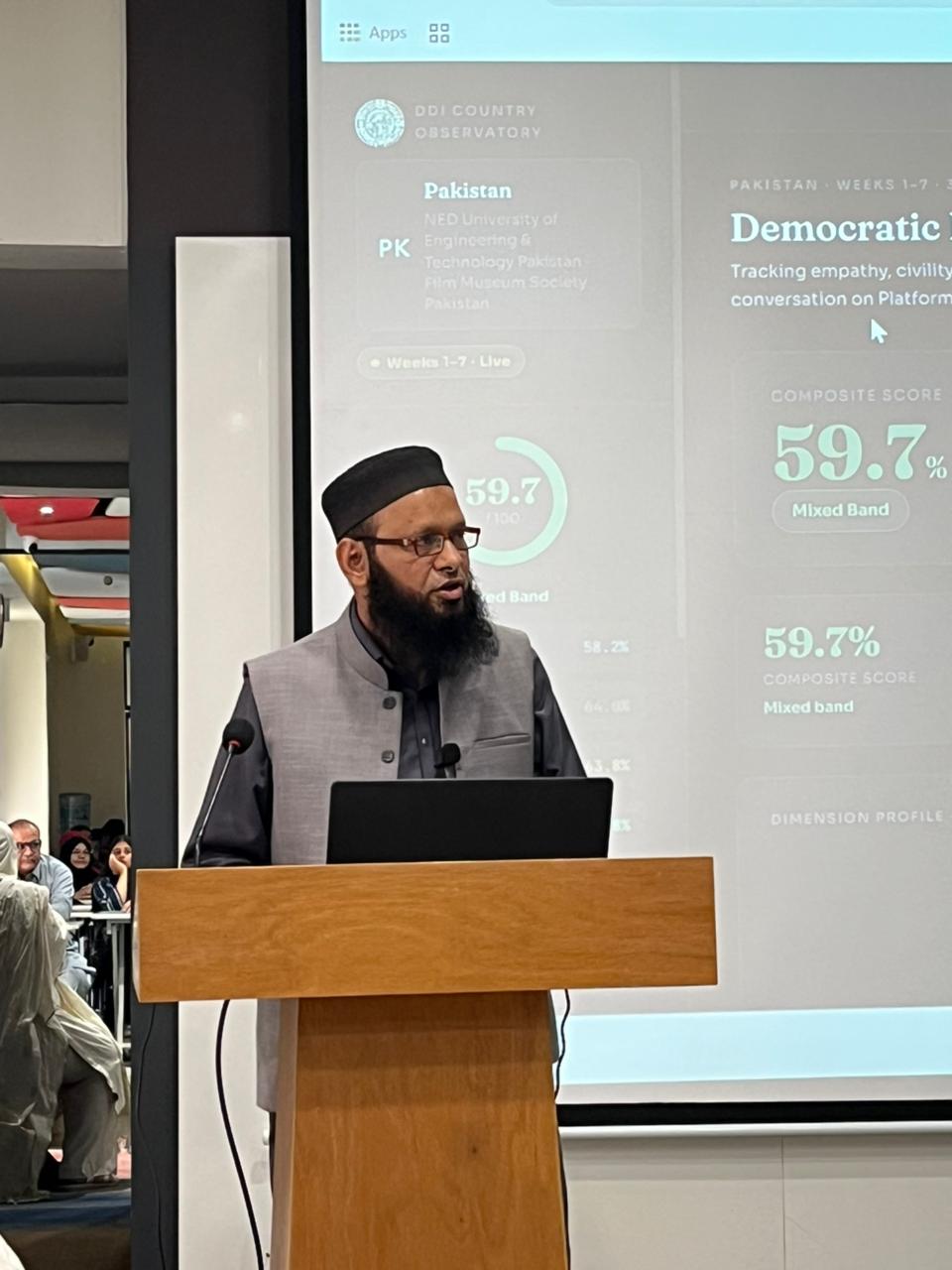
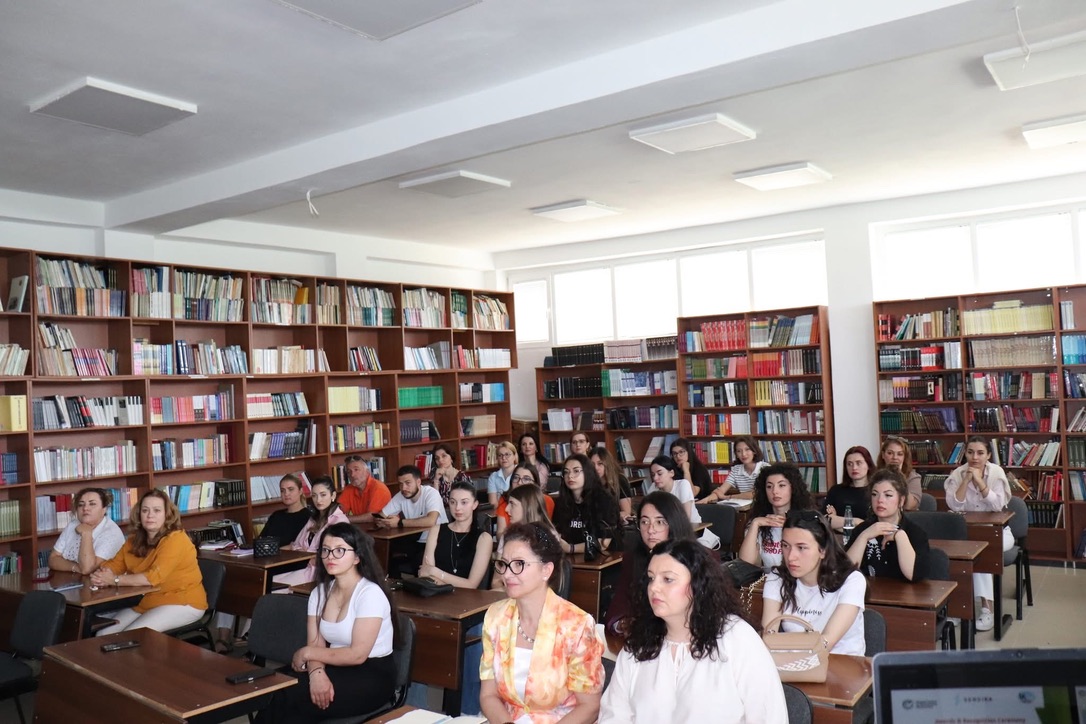
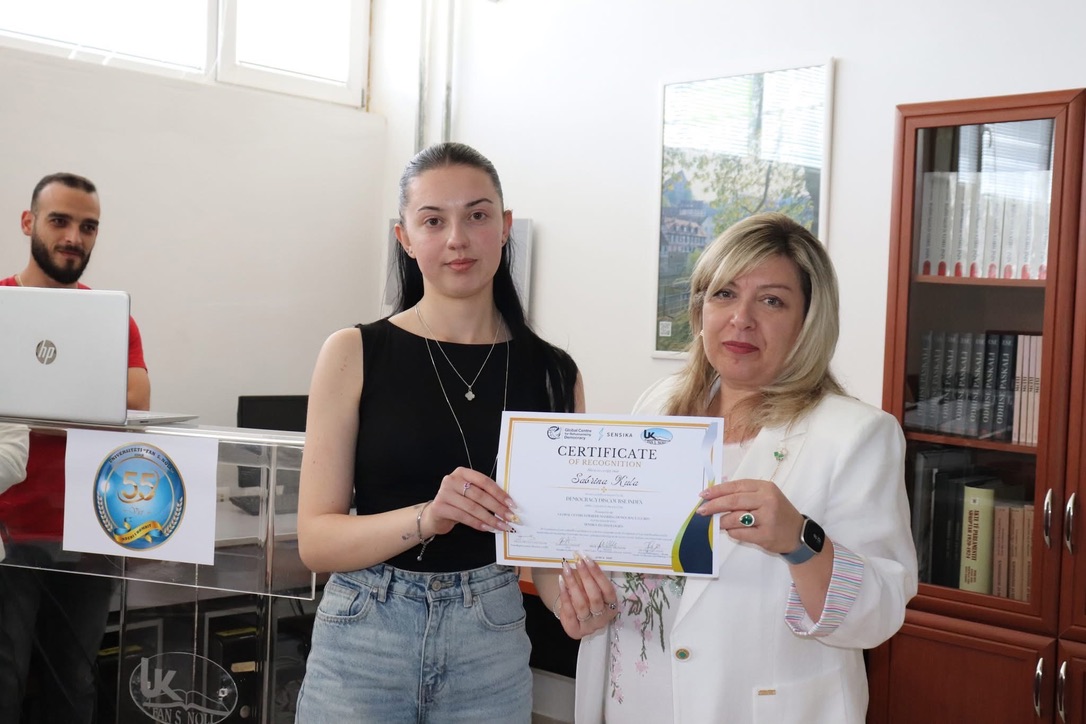
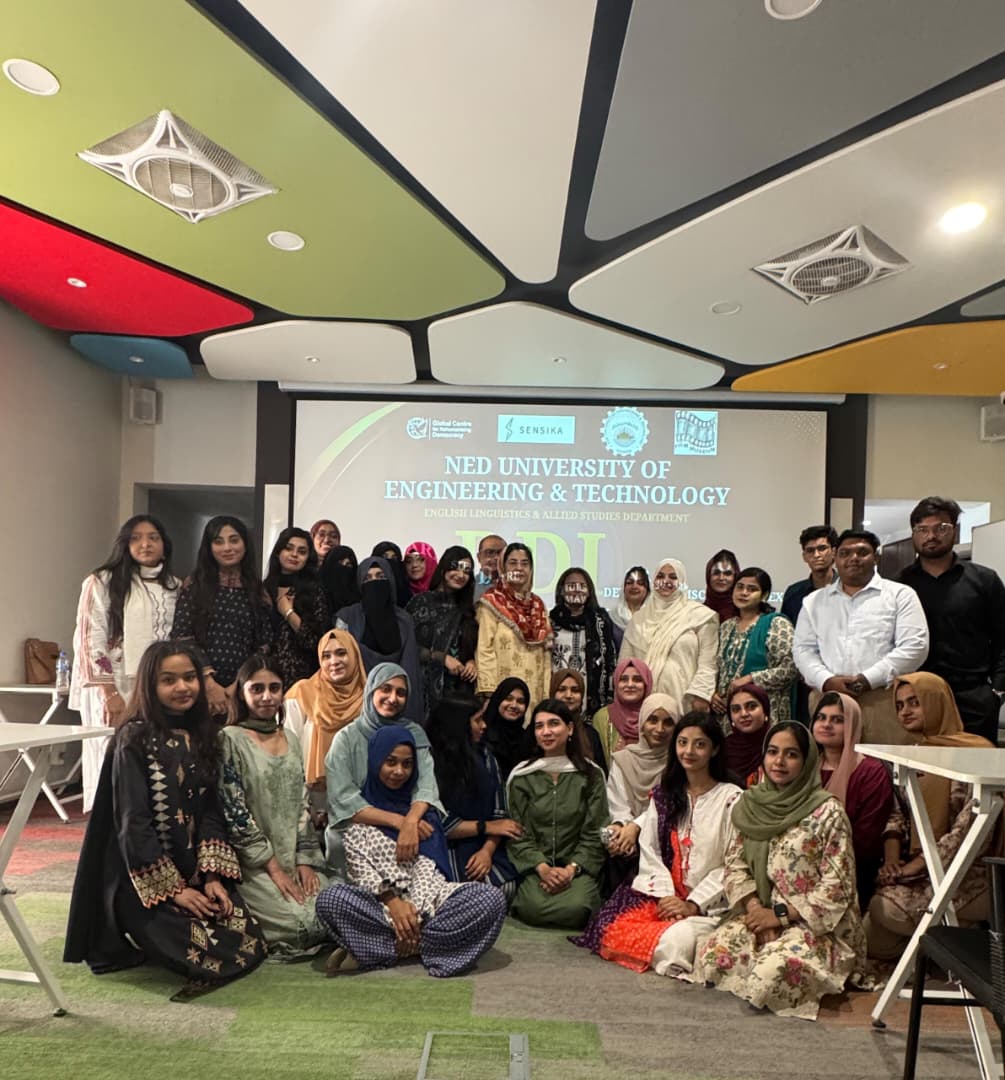
Student research teams at our partner universities code live discourse, turning classrooms into democracy observatories.
From the observatories
Country Brief · June 2026
Albania at the Threshold
Fan S. Noli University, Korçë
At 41.8% composite, Albanian discourse is civil in tone (D2 50.1%) but weak in empathy (D1 43.0%). Democratic Agency at 34.0% signals a population that describes politics rather than claiming it.
Faculty Analysis · May 2026
Mediation and Its Discontents
NED University · Rizvi & Udo-Udo Jacob
Pakistan's mediation role produced the largest single diplomatic-event effect in the study — a 6.5-point composite gain during the Islamabad Talks. The subsequent 16-point Social Cohesion collapse shows that solidarity tied to outcomes does not survive their absence.
Seven universities, seven countries.
The DDI's validity depends on the diversity of its training data. Rather than rely on Western, English-language models, we build the corpus through human coders embedded in local cultural and linguistic contexts. Beginning Spring 2026, faculty-led student teams at seven partner universities turn classrooms into democracy observatories.
Aristotle University of Thessaloniki
Greece
School of Journalism & Mass Communications
New Bulgarian University
Bulgaria
Department of Political Science
Fan S. Noli University of Korçë (UNIKO)
Albania
Foreign Languages & Social Sciences
Tulane University
United States
School of Architecture & Built Environment
University of St. Kliment Ohridski Bitola
North Macedonia
Faculty of Security, Skopje
NED University of Engineering & Technology
Pakistan
With the Film Museum Society
Federal University of Technology Minna
Nigeria
School of Information & Communication Technology
Disciplines range from journalism and political science to security studies and social innovation — all asking the same question: what does the quality of public conversation tell us about the health of democracy? The DDI is delivered in partnership with Sensika Technologies as part of our joint Disinformation Observatory.
Evidence in the hands that can act on it.
Governments & Policymakers
Early-warning signals of discourse deterioration months before institutional damage registers — enabling timely, evidence-based policy response.
Civil Society Organisations
Real-time identification of polarisation, hate speech, and trust erosion — revealing intervention opportunities before crises escalate.
International Organisations
Cross-country comparative discourse data aligned with SDG 16 — supporting multilateral democratic monitoring.
Researchers & Academia
Longitudinal, open-access datasets linking moral and informational indicators of democratic health — an evidence base for democracy scholarship.
A founding circle of scholars, jurists, and practitioners.
The Centre is stewarded by founding trustees and an executive leadership drawn from universities, the judiciary, international development, and finance across four continents — bound by a shared conviction that democracy must be rehumanised.
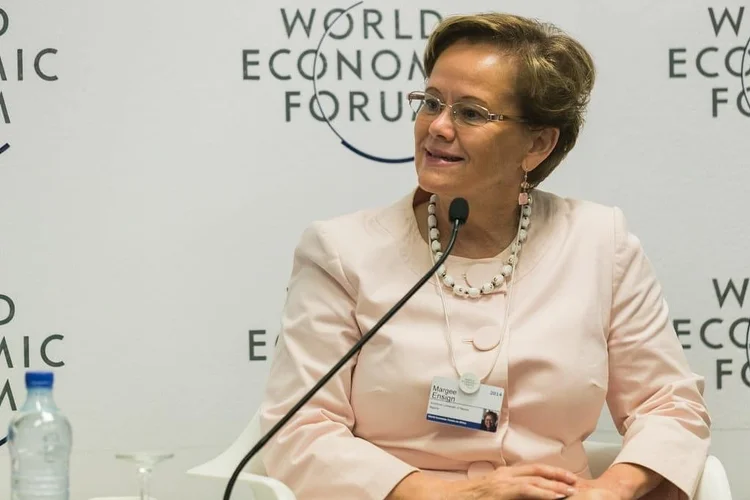
Dr. Margee M. Ensign
Chair of the GCRD Board
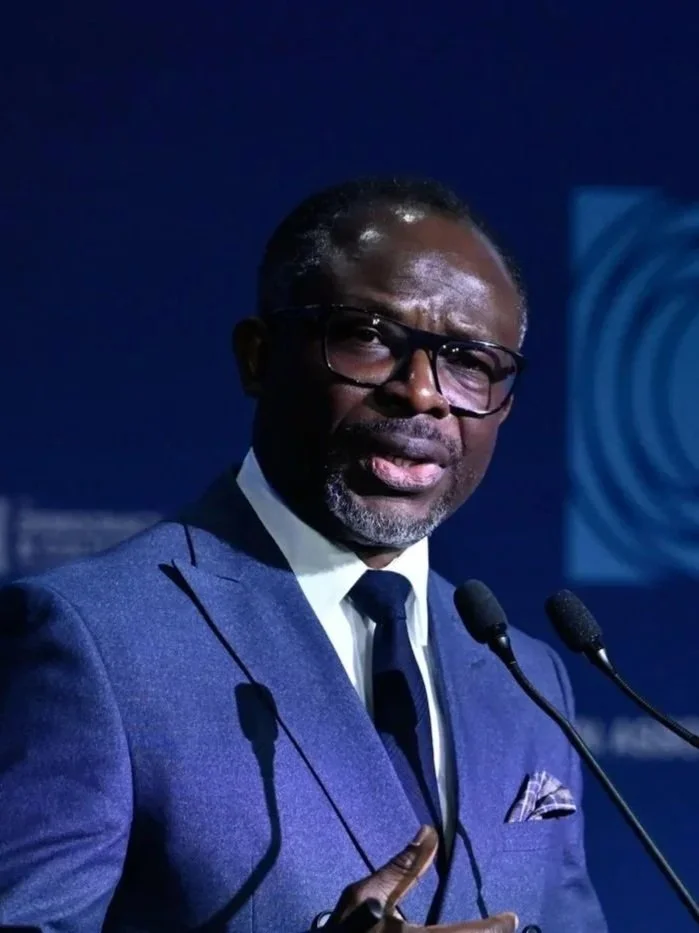
Dr. Jacob Udo-Udo Jacob
Founding Executive Director

Croshelle Harris
Director, Strategic Projects & Partnerships

Dr. Douglas Barry
Board Member & Trustee

Chika Jacob, ACCA
Board Member & Trustee

Peter de Clercq
Board Member & Trustee

Dr. Antonio Garcia
Board Member & Trustee
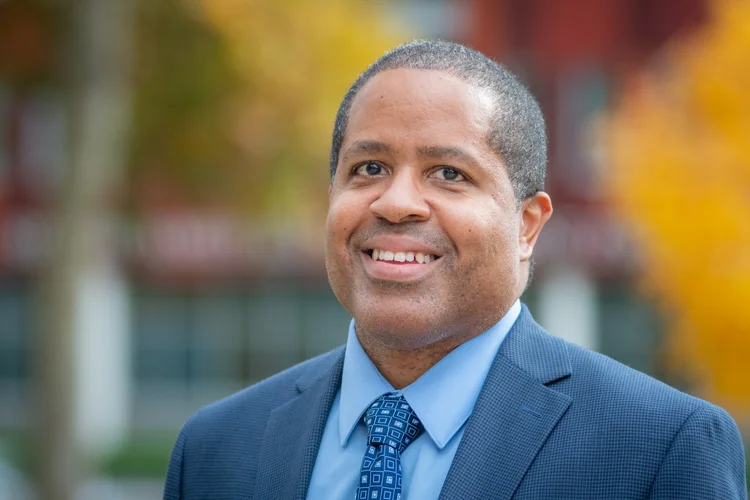
Kendall Isaac, Esq
Board Member & Trustee
Full biographies and the Centre's advisory network are available at gcrd.org.uk/gcrd-leadership.